Why Mindset Might Be the Real Thing Holding Back Your Health Goals
Aug 06, 2026If you've started the same health goal over and over, always restarting on a Monday, the missing piece might not be another strategy. It might be mindset, and not in the "just think positive" sense.
I recently sat down with Brad, a behavior and mindset coach, to talk about the subconscious patterns that quietly work against people even when they have the right plan in place. Here's what stood out.
"I Should" Is a Warning Sign
If you catch yourself saying "I should eat better" or "I should be more consistent," that's usually a sign you're not doing it, and that the sentence itself is part of the problem. Constant "shoulds" function as self-punishment, and success isn't built on punishment. Positivity that skips over real emotions isn't the fix either. It's a form of avoidance dressed up as a good attitude. Mindset is really the sum of the thoughts, beliefs, and emotions running in the background that either support consistent action or quietly undercut it.
The Comparison Trap
Comparing yourself to other moms online often comes from a need to feel significant, to feel like you matter. The antidote isn't forcing yourself to stop comparing. It's building a habit of noticing your own wins. Most people only let themselves feel proud once they've hit a specific outcome, which means everything in between goes uncelebrated. Shifting that, actively noticing what went right this week, tends to change how sustainable the whole effort feels.
Watch Your Self-Talk
Labeling yourself, "I'm addicted to sugar," "I'm lazy," "I have no willpower", isn't a neutral observation. It becomes an identity you then act in line with. Swapping "I'm addicted to sugar" for "I'm someone who can have a cookie and move on" isn't about denial. It's about not building a behavior pattern around a label that isn't even true. The same goes for "lazy." A more accurate reframe is often simply "out of practice."
Perfection Is a Low Standard
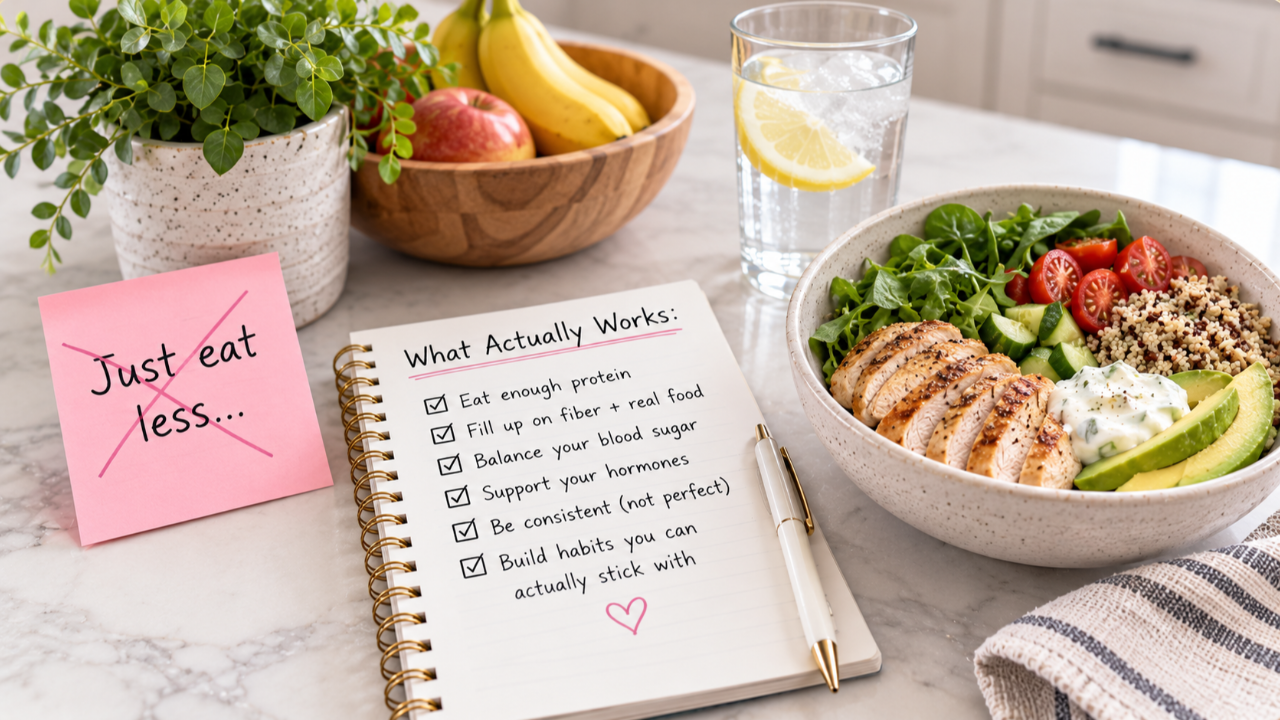
It sounds backwards, but chasing perfection tends to create more pain, not less. It makes people hesitant to start (because uncertainty feels risky), it turns effort into playing not to lose instead of playing to win, and it means nothing ever quite feels like enough, even after real progress. A more useful standard is consistency over perfection.
Strategy Isn't the Only Piece
Having the right plan matters, but plan alone isn't the whole picture. Emotional state and underlying beliefs both shape whether a strategy actually sticks. If the emotional baseline is consistently overwhelmed or anxious, it's worth addressing that directly rather than assuming the plan itself is the problem. Small, repeated shifts in how you talk to yourself and what you choose to notice tend to move the needle more than an overnight mindset overhaul.